
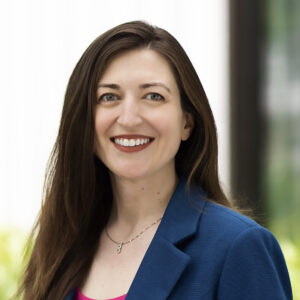
 I’m a clinician–scientist and Chief of Audiology who works at the intersection of patient care, research, and system design.
Clinical Leadership at UCSF
As Chief of Audiology at UCSF, I oversee audiology services across UCSF Health and our children’s hospitals, including a large, multi-site team of audiologists and support staff. Much of my work involves translating evidence and innovation into daily practice so that what we know from research actually changes what patients experience in the clinic.
In my leadership role, I focus on:
- Clinical quality and access: Designing and refining workflows and care pathways that are clinically sound, team-friendly, and realistic in busy clinics—not just on paper.
- Integrated hearing and tinnitus care: Working across disciplines so that hearing and tinnitus are addressed in the broader context of a person’s health, function, and quality of life.
- Patient education and communication: Developing and supporting resources like the EARS hub so patients and families have clear, trustworthy information they can return to over time, not just what they remember from one visit.
- Team culture and mentorship: Supporting audiologists, trainees, and allied professionals as they grow their skills and careers, with an emphasis on curiosity, collaboration, and psychological safety.
A major throughline in this work is aligning hearing and tinnitus services with institutional priorities around access, equity, and high-value, person-centered care. My goal is for patients to feel that our systems work for them, not the other way around.
Why This Work Matters to Me
Hearing and tinnitus work matters to me because it sits at the center of how we connect with each other. When listening is harder, life usually gets smaller—conversations take more effort, gatherings are exhausting, and important moments are easier to miss. I’ve seen how isolating that can feel, and I take seriously the trust people place in me when they let me into that part of their lives.
I’m also drawn to this field because it’s not “just” about devices or test results. Good care depends on the systems around a patient: clear pathways into care, practical education, coordinated teams, and programs that actually work in real clinics, not just in theory. I’m interested in the puzzle of designing and improving those systems so that what we know from research reliably shows up in the exam room and in people’s daily routines.
In my clinical and leadership roles, I try to hold both perspectives at once: the individual in front of me who needs to feel heard, and the larger structures that can either support or fail them. My work is about closing that gap—using science, implementation, and collaboration so that people with hearing loss and tinnitus get care that is compassionate, consistent, and worth their time and effort.
How I Think About Hearing Care
Hearing and tinnitus are deeply personal, but they’re also system problems.
On the individual level, people need accurate assessment, honest conversation about options, and support over time as their needs change. On the system level, clinicians need structures that make it possible to deliver that kind of care reliably—regardless of the clinic door a patient walks through.
A few principles that guide my work:
- Evidence matters, but implementation is everything. It doesn’t help patients if an intervention lives only in journals or trial protocols. I’m focused on what it takes to make good ideas usable in real-world clinics.
- Education is clinical care. The information we give people—how we explain risk, benefit, uncertainty, and prognosis—is a core part of treatment, especially for tinnitus.
- Interprofessional collaboration is not optional. Audiology, otology, primary care, mental health, neurology, and rehabilitation all have a role. Good hearing care depends on us talking to each other and planning together.
- Patients are partners. People bring their own goals, values, and constraints. The best care plans are built with patients, not for them.
Training & Academic Background
I trained as both an AuD clinician and a PhD researcher, with doctoral and postdoctoral work focused on how we measure, understand, and treat hearing loss and tinnitus—and how those insights can inform clinical services and decision-making. I serve as a faculty member in the Department of Otolaryngology–Head and Neck Surgery at UCSF.
My background includes work in:
- Clinical and research training in audiology and auditory science: Work spanning diagnostic audiology, tinnitus, hearing devices, and auditory neuroscience.
- Diverse care settings: Including large academic medical centers, specialized ear and hearing hospitals, and federal medical systems, which has shaped how I think about scalability and equity in hearing care.
- Doctoral and postdoctoral work: Examining how auditory function relates to real-world outcomes, and how to build that knowledge into practical tools and programs for clinicians and patients.
Professional Service & Leadership
Beyond my role at UCSF, I serve in national leadership roles with the American Academy of Audiology and the American Board of Audiology, and collaborate with organizations such as the American Tinnitus Association and scientific societies in hearing and auditory neuroscience. My professional service focuses on:
- Audiology boards and certification bodies – advancing clinical standards, quality, and professional development.
- Tinnitus-focused organizations – supporting research, clinical guidance, and patient-centered initiatives.
- Scientific societies and editorial work – committee and review service that helps connect emerging evidence with everyday clinical practice.
Across these roles, my priorities are consistent: strengthen evidence-based practice, support trainees and early-career professionals, and keep research meaningfully linked to the realities of clinical work.
Collaboration & Current Focus Areas
Right now, much of my work centers on:
- Diagnostics, hearing therapies and clinical trials: Integrating emerging treatments and trial opportunities into routine audiology care, so that appropriate patients can consider new options without having to navigate separate systems.
- Tinnitus care models: Exploring and refining approaches that are both evidence-informed and sustainable in day-to-day practice, including structured counseling, education, and coordinated care with mental health and other specialties.
- Patient education and digital resources: Building and iterating on tools like the EARS hub to help patients and families make sense of their hearing and tinnitus over time, not just during a single appointment.
- Training the next generation: Mentoring audiology trainees and early-career clinicians who want to bridge clinical care, research, and systems-level thinking, and helping them navigate the realities of working in complex health systems.
For organizations or colleagues, this often looks like co-developing care pathways, piloting tinnitus care models, integrating trial opportunities into existing clinics, or creating education and training initiatives—sometimes also in partnership with trainees and early-career professionals who are interested in these areas.